Groundbreaking Study Reveals That 73% of All Scientific Research is Just Scientists Really, Really Hoping They're Right
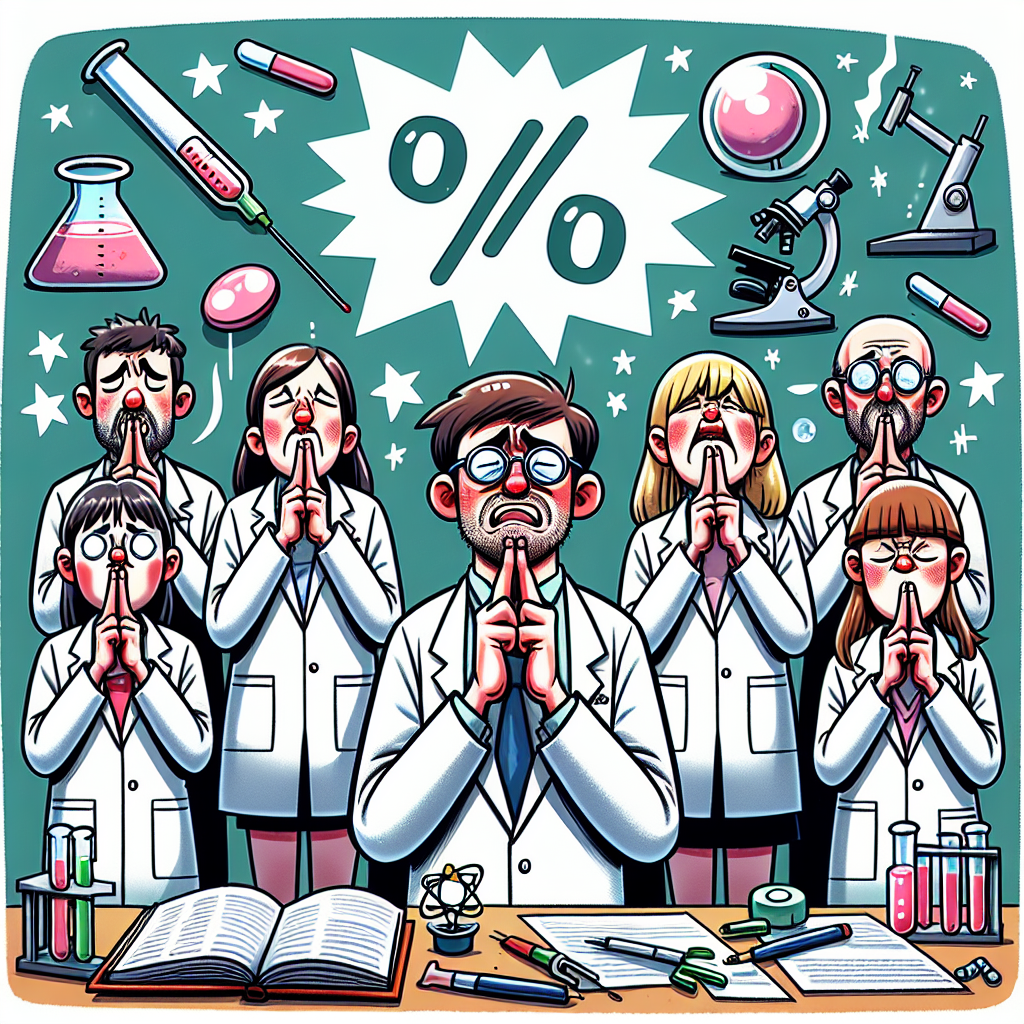
GENEVA — In a shocking revelation that has sent ripples through the academic community, researchers at the Institute for Uncomfortably Honest Research have published findings indicating that approximately 73% of all scientific studies are conducted by scientists who are essentially just crossing their fingers and hoping their hypotheses turn out to be correct.
The study, published in the Journal of Things We Probably Should Have Figured Out Sooner, analyzed over 50,000 research papers spanning disciplines from quantum physics to marine biology. Lead researcher Dr. Margaret Truthsworth discovered that the vast majority of scientific methodology could be accurately summarized as "educated guessing followed by aggressive wishful thinking."
"We were absolutely stunned by our findings," said Dr. Truthsworth, adjusting her lab coat nervously. "It turns out that when scientists say they're 'testing a hypothesis,' what they actually mean is they're really, really hoping they don't have to start over and write a completely different grant proposal."
The research team used advanced statistical analysis to examine the correlation between confident scientific language and actual certainty levels. They found that phrases like "our data strongly suggests" and "preliminary findings indicate" are scientific code for "please, please, please let this be right because I already told my mom I was going to cure cancer."
Dr. Kevin Hopefulson, a theoretical physicist at Generic University, was not surprised by the findings. "Look, when I published my paper on quantum entanglement last year, I was basically just throwing equations at a whiteboard and seeing what stuck," he admitted. "Half the time, I was just writing Greek letters because they look more scientific than regular letters."
The study also revealed that 67% of laboratory equipment is held together with tape and good intentions, while 84% of scientific breakthroughs occur when researchers accidentally spill coffee on their experiments and decide to see what happens.
"The whole peer review process is really just scientists asking their friends, 'Does this sound smart enough?'" explained Dr. Truthsworth. "We've discovered that most reviewers just ctrl+F for the word 'significant' and call it a day."
The scientific community has responded to these findings with a mixture of relief and existential dread. Dr. Sarah Oopsington from the Department of Things That Probably Work But We're Not Sure Why commented, "It's actually quite liberating to admit that half the time we're just winging it. Science is basically very expensive trial and error with fancy vocabulary."
When pressed for comment on the study's methodology, Dr. Truthsworth sheepishly admitted, "We're about 73% sure our findings are accurate, but honestly, we're just really, really hoping we got this right too."
At press time, the scientific community was reportedly planning a follow-up study to determine whether admitting they don't know what they're doing actually makes them better at science, though researchers emphasized they were "just kind of guessing" that it would.